Intermediate 4-6 hours Worsted yarn

Worked on the glider, counted out loud —

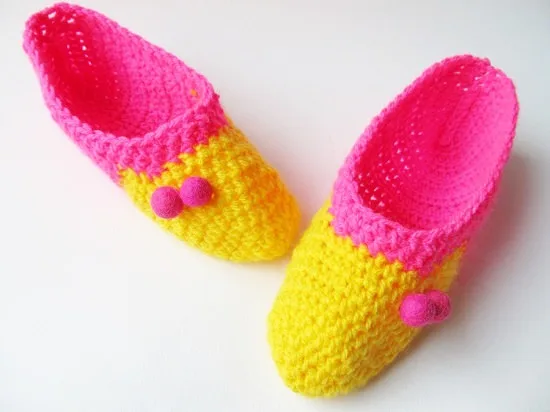
Cozy two-color crochet slippers for quiet evenings

Beginner-friendly worsted slippers worked in rounds with a 4mm hook. Good for an evening or two of easy, repetitive stitching.

Jump to the rounds

What this one is

This is the kind of project you pull out when you want your hands busy and your mind loose. You're sitting with a quiet task that doesn't ask much of you beyond counting stitches, which makes it a good fit if you're newer to crochet but comfortable with an HDC and ready to try shaping a little round. It's also just right for anyone who wants a simple, cute pair of house slippers without a complicated construction behind them.

Your hands will spend most of this pattern in half double crochet, working in continuous rounds that grow from a tiny six-stitch center out to a full slipper shape, then build up the sides in a long stretch of rounds. Between the toe shaping, the body rounds, and the upper rows, plan on a few sittings rather than one long one -- there's no rush built into this, and that's part of the appeal.

The rounds, in full

Written out, round by round

Intermediate4-6 hours4 mmWorsted

Bring to the porch

Everything this one takes, in the order you will reach for it.

Yarn

  • worsted (any colors you like)
  • Hook: 4mm

R1

  1. Round 1Ch 2, 6 HDC in the second ch from hook. (6)

R3

  1. Round 1HDC 1, 2 HDC in next sc, rep 6 times. (18)

R4

  1. Round 1HDC 2, 2 HDC in next sc, rep 6 times. (24)

R5

  1. Round 1HDC 3, 2 HDC in next sc, rep 6 times (30)

R6-10

  1. Round 11Now, you’re going to be working back and forth in ROWS. Ch 2, HDC in the same stitch and continue until you have 21 stitches, leaving 9 unworked. Ch 2, turn.

R2

2 HDC in each sc around. (12)

R12-R25

1st Round. Change color (pink) at R13 and continue as R11

R26: Seam up the heel by putting the right sides together and slip-stitching from the top down to the bottom of the heel.

  1. Round 1Now, in order to make your slipper snugger join your yarn at the center back of the slipper, above the heel. Sc into that same spot.
  2. Round 2You’re going to be working down the side of the HDC that make the foot of the slipper. Work sc stitches down the side, till you get to a corner.
  3. Round 3At the corner, sc3tog (half of the last side HDC, and the first 2 HDC on the top.(2)
  4. Round 4SC into next 5 stitches, sc3tog (last 2 HDC on toe top and half of the first HDC up the next side and sc up the side towards the heel.(2)

Note: In order to adjust the slippers to your shoe size, change the number of rounds 6 and 25.

Grab your $30 crochet bundle — free

3 instant downloads when you join Crocht: a jewelry ebook, a beginner star pattern, and our best summer yarns guide. 100% free.

No spam. Unsubscribe anytime.

Marlene's notes

Note 01

Use a 4mm hook throughout; a smaller hook will make the sole stiff and a larger one will leave the fabric too loose to hold a slipper shape.

Note 02

Mark the beginning of each round as you go, since the pattern works in continuous spirals and it is easy to lose track between R6 and R10 or across the long R12-R25 stretch.

Note 03

Keep your tension even and a little firm, especially through the increase rounds R3 and R4, so the sole lies flat instead of cupping or rippling.

Before you sit down

  • Check how much worsted-weight yarn you have in each color you're planning to use, since the two-color look depends on having enough of your second shade to carry through the upper rounds.
  • Keep a stitch marker handy for the start of each round, since this pattern works in continuous rounds without a join, and losing your place is the easiest way to end up with a mismatched stitch count.
  • Work a quick HDC swatch with your 4mm hook first to see how your tension sits in worsted yarn, since slipper fit depends on getting a fabric that's snug but not stiff.
  • Read through R1 before you pick up your hook, since starting six HDC into the second chain from the hook is the one setup step the whole shape depends on.

How the hours go

R1 through R5
about 20-30 minutes because the increases build fast from 6 to 24 stitches and need steady counting
R6 through R10
about 30-45 minutes because this stretch settles into even rounds with no shaping to track
R12 through R25
about 2-3 hours because it's the longest run of rounds and the stage where a color change, if you use one, needs tidy handling

Looking after it

  • Hand wash your slippers in cool water with a mild soap, since worsted yarn can felt or shrink if it gets agitated in hot water.
  • Lay them flat to dry away from direct heat, reshaping the toe and sole gently with your hands so the HDC rounds settle back into their original shape before you store them.
FAQs

Asked on the glider

the ones that come up on the glider

Can I use two different yarn brands for my two colors?

Yes, as long as both are worsted weight they'll work together fine. Just check they're similar in thickness so your rounds stay even.

Do I need stitch markers for this pattern?

A marker isn't strictly required, but it helps a lot since the rounds are continuous with no slip stitch join. Dropping one at the start of each round saves you from losing count, especially across the long R12-R25 stretch.

What if my slippers come out too tight or too loose?

Tension with your 4mm hook makes the biggest difference here, so check your swatch feel before committing. If they're still off after that, go up or down a hook size rather than changing stitch counts.

How long does one slipper actually take me?

Most people get through one slipper in a few sittings, roughly four to six hours total including the long body section. The increase rounds go quickly, so most of your time is in the steady middle rounds.

Can I make both slippers in different color combinations?

Absolutely, since the shaping is identical for both feet, only the colors need to match within each slipper, not between the pair. Some of the nicest versions use one color scheme per foot.

Is this a good first pair of slippers for someone new to rounds?

Yes, the HDC increases from 6 to 18 to 24 stitches are a gentle introduction to shaping in the round. Once you're past R5, the rest is steady repetition with no new techniques to learn.