01
What this one is
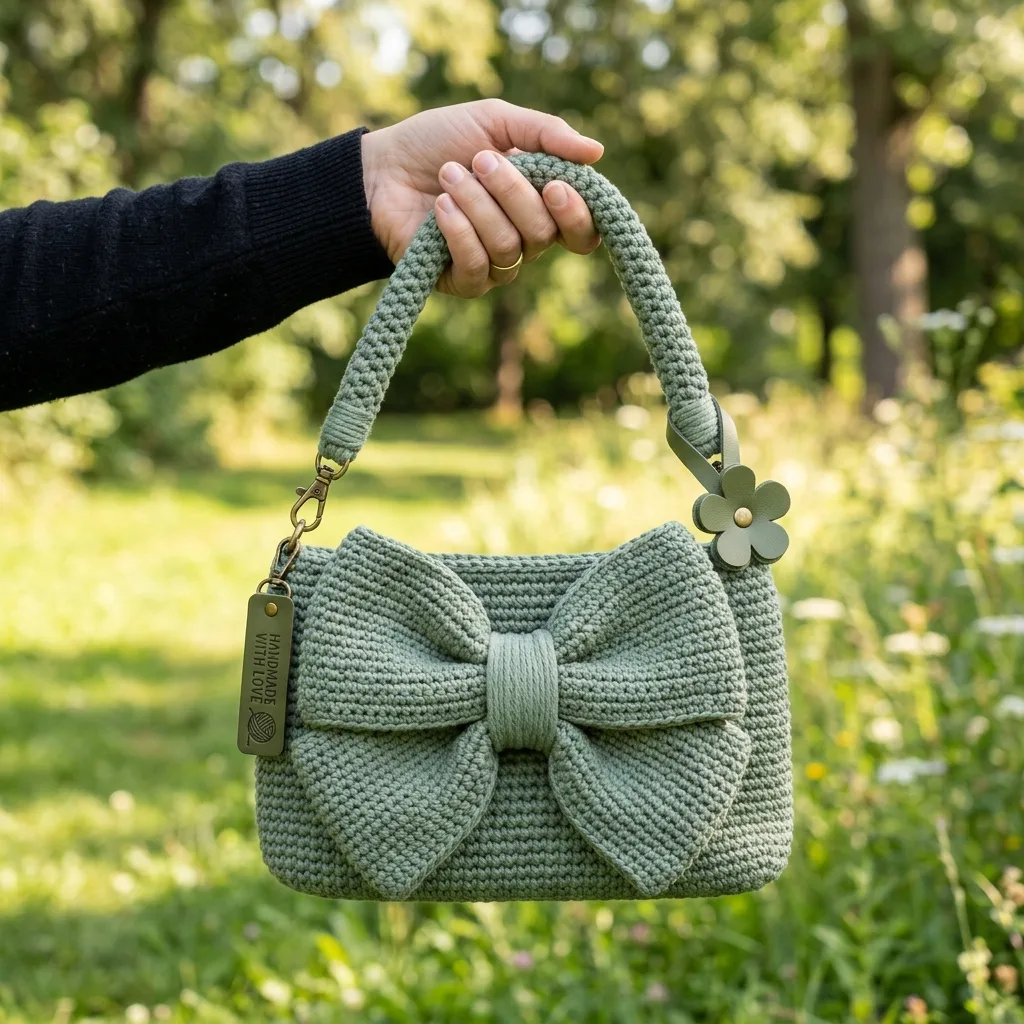
This one is for whoever needs a bag that can hold its shape without holding you hostage to a pattern book for weeks. You know the type -- someone who wants a handbag that looks store-bought but carries the quiet proof of hours spent with a hook, something sturdy enough for a farmers' market run or a day at the desk. The sage green keeps it calm, and the bow detail keeps it from being plain.
Your hands will spend most of this project in plain single crochet, round after round, building up a firm cotton fabric that holds weight the way a handbag should. The shaping comes in near the top, where decrease rounds pull the opening in and a back-loop-only round gives it a crisp little ridge. Between the body, the top shaping, and attaching the D-rings and clasps, plan on four to six hours, with breaks for coffee and finding your stitch markers again.
02
Try it another way
If you want a smaller everyday version, work the same stitch pattern but stop a few rounds earlier in the body before you reach the top shaping, since the decrease rounds will still pull the opening in regardless of how tall you went below them. For color play, keep the body in sage green and swap only the strap connectors, since the leather or faux leather pieces with the flower embellishment are listed as optional and easy to source in another shade. If cotton feels heavy in your hands, a cotton blend keeps the structure the materials list recommends while lightening the finished weight a little. The Longer strap option is worth making if you want this to sit crossbody instead of handheld -- just add length before you attach the swivel lobster clasps and D-rings, since those pieces are what let you swap strap lengths later without redoing any stitches. You can also play with the bag tag or charm listed as optional hardware, since a small charm at the D-ring changes the whole personality of the bag without touching a single round of the pattern itself.
What makes this one satisfying is how the firmness of the fabric does the work for you. A sturdy cotton worked at a tight gauge turns ordinary single crochet into something that stands up on its own, no stiffener required. The shaping at the top edge is the real payoff: that sc2tog decrease round pulling 23-stitch repeats in, followed by a plain round, then the back-loop-only round that leaves a clean ridge you can feel under your thumb before the final round closes things off with a slip stitch join. Add the hardware -- swivel lobster clasps clicking into D-rings -- and you get a bag that feels finished like something from a shop, not a craft table. It is the kind of piece where every round has a job, and you can see the job getting done.