01
What this one is
This blanket is for the quiet evening you set aside once you know a baby is coming — maybe you're sitting with the hook in hand while someone else sleeps, or you've claimed the corner of the couch for yourself. It's for new parents, grandparents who want their hands busy with love, or anyone who likes giving something made rather than bought. The size and softness say nursery, stroller, and that first ride home.
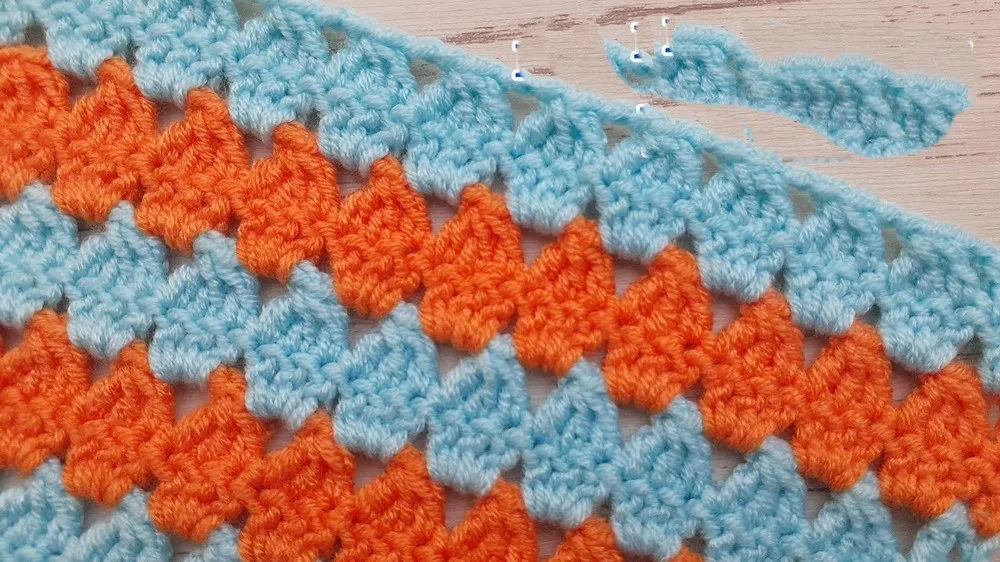
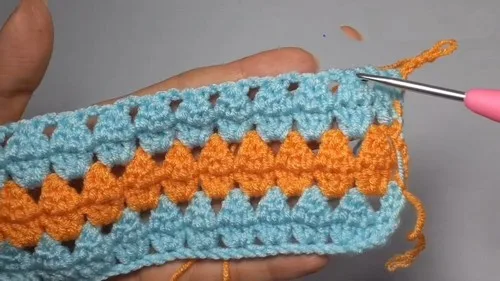
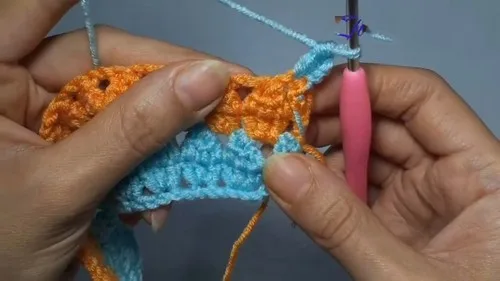
Your hands will spend most of the time building the granny-style clusters — three double crochets worked together, then released again into airy chain spaces that keep the fabric light. You start with a chain of 37 (or any multiple of three plus one, if you want to resize), then settle into rows of dc3tog decreases and clusters that repeat until the blanket reaches the width you want. Plan on a few relaxed sittings rather than one long stretch, since the rhythm invites pauses.
02
Try it another way
The chain is built to flex: cast on more than 37 as long as you keep the multiple-of-3-plus-1 rule, and you can take this from a lapghan to a full stroller or crib-sized throw. Swap Aize Baby Best for any yarn in a similar weight if you want a different feel underhand — a cotton blend for warmer climates, or a fuzzier fiber for extra snuggle, though your gauge and final size will shift with the change. Color is where this pattern really opens up: work the whole thing in one shade for a clean, modern look, or change color every few rows for soft stripes that fall right along the cluster rows. You could also hold back a second color just for the final row or two, so the border reads differently from the body. If you are making this as a gift, consider a single skein in a pale, gender-neutral tone with one contrasting row near the start or end as a quiet signature touch. The granny-cluster texture is forgiving of yarn substitutions, so this is a good pattern to raid your stash for, provided you keep that chain-multiple math in mind.
What I love about this one is the texture play — the dc3tog clusters pop up like little knots between open chain-2 spaces, so the surface has real dimension without a single bobble or popcorn stitch. The pattern leans on just two moves repeated with intention: a cluster, then a chain gap, then another cluster. That simplicity means you can keep the hook moving without constantly checking a chart, yet the finished fabric reads as anything but basic. Because every row ends with 2 dc worked into the first and last stitches, your edges stay tidy and squared off, which matters more than people expect when you are hemming something destined to be wrapped around a baby. It is satisfying work for hands that want rhythm, not riddles.