Intermediate 4-6 hours Worsted yarn

Worked on the glider, counted out loud —

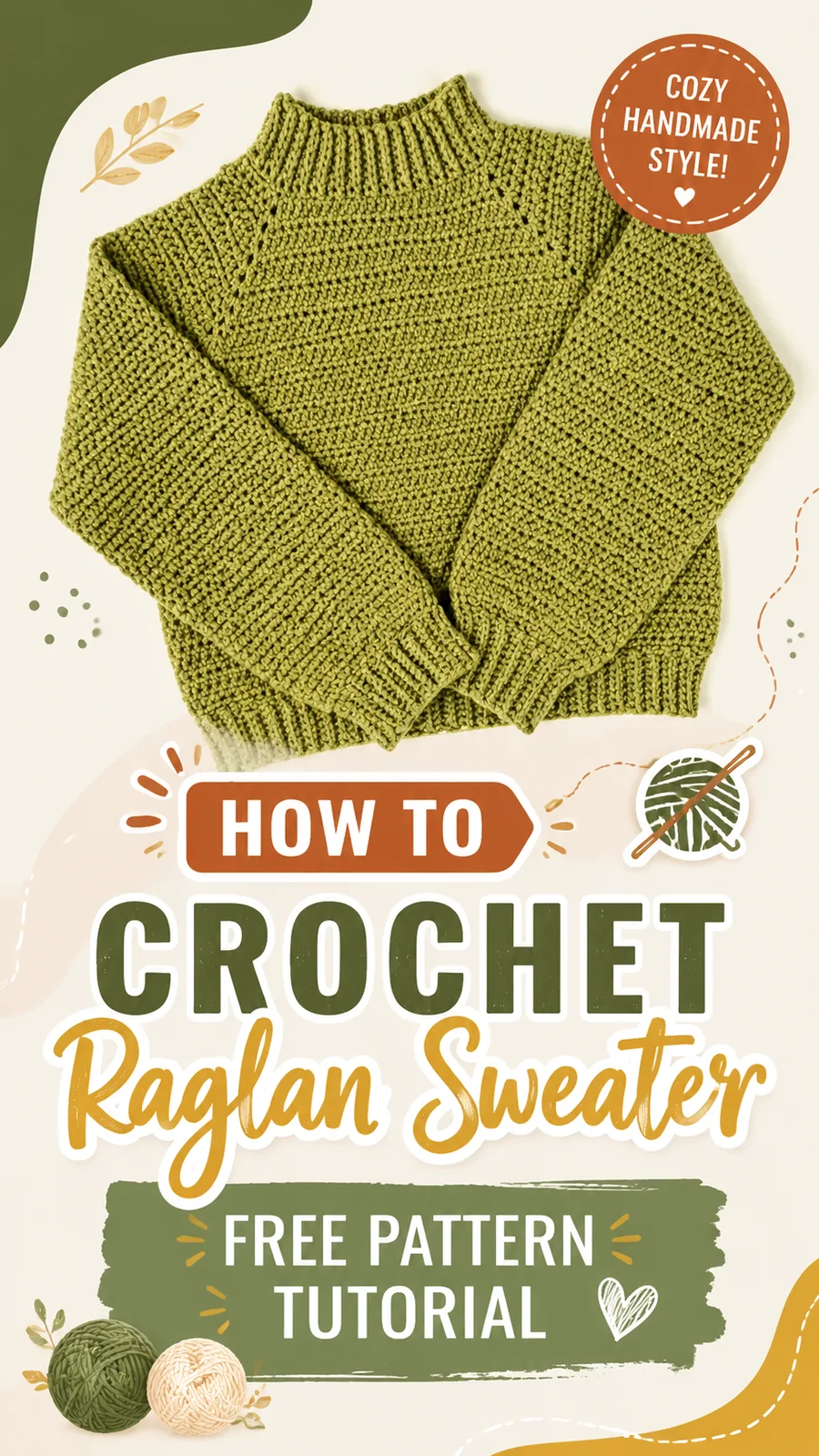
Cozy top-down raglan crochet sweater for beginners

A top-down raglan pullover with textured stitches and ribbed trim, suited to confident beginners with a free evening or two.

Jump to the rounds

What this one is

You know the kind of evening this sweater is for: the one where you want something on your hook that will actually end up in your closet, not just your project basket. This is for the crocheter who has made hats and scarves and is ready to try a garment without getting lost in a pattern. The top-down raglan shape is forgiving, and that makes it a kind and sturdy first sweater.

Your hands will spend most of their time in a simple rhythm here: single crochet, half double crochet, repeat, with raglan increases marked at four corners so you never have to guess where shaping happens. The yoke grows quickly, the sleeves and body settle into long easy rounds, and the ribbing at the end is almost meditative. Plan for several sittings rather than one long stretch, since a full sweater takes real hours, not minutes.

Try it another way

There is something deeply satisfying about watching a flat ring of chains turn into a wearable shape, and this raglan does that trick in a way you can actually follow. The four marked raglan corners mean the increases are never mysterious, just steady and visible. The alternating single crochet and half double crochet texture gives the fabric a quiet ridged surface, so even a solid color sweater has depth and movement under your fingers. By the time you reach the ribbed cuffs, hem, and neckline, you are doing the small satisfying work of finishing rather than fighting construction. It is the kind of project where every round brings the garment closer to something you would actually wear out the door.

The rounds, in full

Written out, round by round

Intermediate4-6 hours5 mmWorsted

Bring to the porch

Everything this one takes, in the order you will reach for it.

  • Category 4 medium-weight yarn, approximately 1,600 yards (1,463 meters)
  • 5 mm US H-8 crochet hook
  • Stitch markers
  • Yarn needle
  • Scissors
  • Tape measure

Neckline and Raglan Yoke

The sweater begins at the neckline and is worked downward. Raglan increases are placed at four markers. Turning chains do not count as stitches unless specifically stated.

Ch 72. Join with sl st to first ch, being careful not to twist.

  1. Round 1Ch 1, sc in each chain around. Join with sl st. (72 sts)
  2. Round 2Ch 2, hdc in same stitch, place markers after stitches 18, 36, 54, and 72. These mark four raglan corners. (72 sts)
  3. Round 3Work hdc until first marker, increase with 2 hdc in marked stitch, continue around increasing at each marker. (76 sts)
  4. Rounds 4–18Rounds 4-18: Continue increasing 4 stitches every round at each raglan corner. At the end of Round 18 you will have 132 stitches.(132)

Sleeves

Attach yarn at underarm opening.

  1. Round 1Work hdc evenly around sleeve opening. (56 sts)
  2. Rounds 2–28Continue textured stitch pattern, decreasing 2 stitches every 5 rounds by working two hdc stitches together at the underarm area.Finish when sleeve measures approximately 18 inches (46 cm).Work 8 rounds of sc blo ribbing for cuff.

Special Stitch

Textured stitch: Alternate one row of hdc blo and one row of sc. Turn after each row. This creates the subtle ridged texture used throughout the sweater.

Body Section

Separate sleeves by placing sleeve stitches on holders. Join front and back sections with underarm chains of 8 stitches on each side.

  1. Round 1Work textured stitch around body. (148 sts)Continue the textured stitch pattern for 36 rounds or until the sweater reaches desired length.Finish with 8 rounds of sc blo ribbing.Fasten off and weave in ends.

Neckline Ribbing

Attach yarn around neckline. Work 8 rounds of sc blo, joining each round with a slip stitch. Fasten off securely.

Finishing

Secure all yarn ends using a yarn needle.

Lightly block the sweater to even out stitches.

Shape the shoulders and sleeves gently while drying.

Putting it together

Step 1

After completing the sweater, gently wash or dampen the garment according to the yarn instructions. Lay it flat on a clean surface and shape the neckline, sleeves, and body edges evenly.

Step 2

Store handmade crochet sweaters folded rather than hanging to help maintain their shape. Gentle washing and careful drying will keep the stitches looking beautiful for years.

Marlene's notes

Note 01

Your 5 mm US H-8 hook should feel snug but not tight in the textured stitch pattern; if your fabric feels stiff, try a swatch with a slightly looser hand before starting the yoke.

Note 02

Keep your four raglan markers moving with the stitches every round, not just left in place, or the corners will drift and the increases will land unevenly.

Note 03

The sleeves decrease two stitches every five rounds at the underarm, so keep a simple tally as you go rather than trying to count back from memory later.

Note 04

The 72-chain starting round sets your whole sweater size, so measure your gauge swatch against this number before joining your foundation chain.

Note 05

This pattern makes a Medium: bust 40 inches (102 cm), length 24 inches (61 cm). Gauge is 16 stitches and 12 rows in 4 inches (10 cm) worked in the textured stitch pattern; always crochet a gauge swatch before starting, since even small differences in tension can change the final sweater measurements and fit.

Note 06

Uneven raglan lines: check that increases are placed at all four markers every round.

Note 07

Incorrect sweater size: confirm gauge before continuing beyond the yoke.

Note 08

Tight neckline: increase the starting chain count or use a larger hook.

Note 09

Uneven sleeves: count sleeve stitches before beginning decrease rounds.

Before you sit down

  • Check that your yarn put-up is enough for a full sweater in category 4 medium-weight yarn before you commit to a color.
  • Have four stitch markers ready and placed as soon as Round 2 calls for them, since the whole raglan shape depends on those four corners.
  • Work a small swatch in the alternating hdc and sc texture pattern to see how your tension looks before you commit to 72 starting chains.
  • Read through Round 3 and the increase instructions once fully before you start, so the raglan corner increases feel familiar rather than surprising.

How the hours go

Neckline and Raglan Yoke
about 1-1.5 hours because the increases repeat every round through Round 18 and need the markers tracked carefully
Sleeves and Body Section
about 2-3 hours because each sleeve works 28 rounds with decreases every five rounds, and the body adds length in the same textured pattern
Ribbing and Finishing
about 1 hour because the cuffs, hem, and neckline ribbing are worked in straightforward sc blo but take patience across several rounds

Looking after it

  • Hand wash your finished sweater gently in cool water suited to your category 4 yarn's fiber content, then lay it flat to dry so the ribbed neckline, cuffs, and hem keep their shape rather than stretching under their own weight.
  • Store the sweater folded rather than hung, and reshape the neckline and sleeve edges by hand after washing to keep the textured stitch pattern looking crisp over time.
FAQs

Asked on the glider

the ones that come up on the glider

What size does this pattern make?

The written instructions here create a medium size, with the pattern notes mentioning adjustment guidance for other sizes. The foundation chain of 72 stitches is your starting point for that medium fit.

How do I know where to place the stitch markers?

Round 2 tells you to place markers after stitches 18, 36, 54, and 72, which divides your round evenly into four raglan sections. Those four points are exactly where the increases happen in every following round.

Why does my sleeve count not match the pattern?

The sleeve opening starts at 56 stitches and then decreases two stitches every five rounds at the underarm, so your count should shrink steadily as you work the 28 total rounds. If your numbers are off, check that your underarm decreases are landing in the right spot each time.

What is the textured stitch actually doing?

The special stitch alternates one row of hdc blo with one row of sc, turning after each row, which builds the subtle ridged texture used through the body and sleeves. It is a simple two-row repeat once you get the rhythm of it.

How long should I expect the whole sweater to take?

Between the yoke, sleeves, body, and ribbing, you are looking at roughly 4-6 hours of hooking time spread across several sittings. The yoke moves fastest, while the long sleeve and body rounds take the bulk of the time.