Intermediate 15-20 hours Worsted (Category 4) yarn

Worked on the glider, counted out loud —

Textured Rectangle Throw in Alternating Single and Double Crochet

A confident-beginner throw with ridged texture, 176 stitches per row. Suits porch evenings; about 15-20 hours end to end.

Jump to the rounds

What this one is

You know the evening this one's for: lamp on, something quiet playing, a lap that needs covering while the light goes soft outside. This is a blanket for the person who likes their throws with a bit of texture under the palm, not perfectly smooth, more like a landscape you can read with your fingers. It's the kind of make-ahead comfort you keep folded over the sofa arm for whoever wanders in cold.

Your hands will settle into a rhythm fast here, because the whole body of the blanket is one repeating move: single crochet, double crochet, single crochet, across 176 stitches, row after row after row. It's the sort of project that rewards patience rather than skill, so plan on it living with you for a good while, picked up over several sittings, before you close it off with a simple all-around border. Finished size runs approximately 50 x 60 inches (127 x 152 cm).

Try it another way

This blanket is easy to resize because the construction is just a flat rectangle worked in rows. For a baby blanket, start with approximately 101 chains and work fewer rows for a smaller size. For a lap blanket, use around 125 chains for a compact cozy throw. For a large bed blanket, increase the foundation chain and add additional yarn to match. If you'd rather have wide color-blocking than narrow stripes, change colors every 8 to 12 rows for a modern layered effect, using soft shades like cream, sage, dusty pink, oatmeal, blue-gray, or other muted pastels for the same calm handmade look. Before you measure your finished piece, lay it flat first, since crochet fabric naturally relaxes after blocking and accurate measurements are easier to get once the stitches settle. Swapping yarn weight is possible too, though moving away from category 4 will change both your stitch count and your final dimensions, so replan your foundation chain and row total before you start rather than partway through.

There's something genuinely satisfying about a stitch pattern this simple producing a fabric this interesting. Alternating single and double crochet across 176 stitches builds a subtle ridge with every row, so the surface catches light differently than a plain sc or dc blanket would, without asking you to learn anything new. You get thickness and drape at the same time, which is rare. The border round, worked in single crochet with 3 sc tucked into each corner, is the kind of small technical detail that makes a homemade blanket look finished rather than just stopped. And because the repeat is so easy to memorize, this becomes a piece you can work while you talk, while you watch something, while you think about other things entirely.
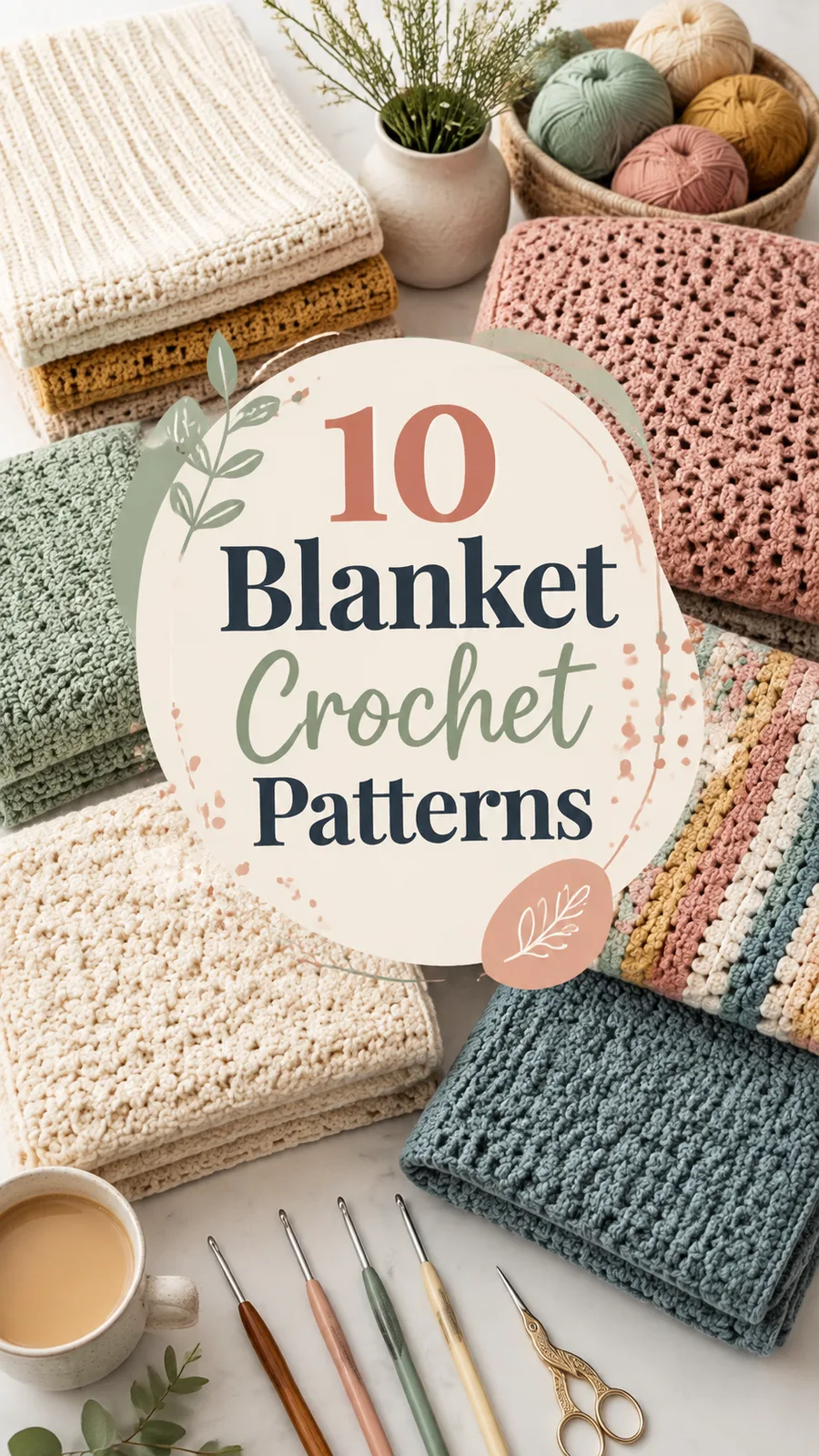
The rounds, in full

Written out, round by round

Intermediate15-20 hours5.5 mmWorsted (Category 4)

Bring to the porch

Everything this one takes, in the order you will reach for it.

  • Approximately 2,800 yards (2,560 meters) of category 4 medium-weight yarn (acrylic, cotton blend, or soft washable yarn)
  • 5.5 mm (US I-9) crochet hook
  • Yarn needle for weaving ends
  • Scissors
  • Measuring tape
  • Stitch markers for keeping track of edges if desired

Main Pattern

The blanket begins with a foundation chain and grows upward in rows. Turning chains do not count as stitches throughout the pattern. Each row is worked across the previous row stitches only.

  1. Foundation RowCh 177. Sc in the second ch from hook and across. Turn. (176 sts)
  2. Row 1Ch 1, sc in first st, *dc in next st, sc in next st; repeat from * across. Turn. (176 sts)
  3. Row 2Ch 1, sc in first st, *dc in next st, sc in next st; repeat from * across. Turn. (176 sts)Rows 3-148: Repeat Row 2. Maintain 176 stitches across each row. Change colors every 12 rows if creating stripes.

Border Instructions

  1. Round 1Attach yarn in any corner. Ch 1, work sc evenly around the entire blanket edge. At each corner, work 3 sc into the corner stitch to help the blanket lay flat. Join with a sl st to the first sc.
  2. Round 2Ch 1, sc in each stitch around, placing 3 sc in each corner stitch. Fasten off and weave in all ends.

Special Stitch

Texture Stitch: The main pattern alternates stitches to create raised rows.

Texture repeat: Skip the first stitch, work 1 dc in the next stitch, then work 1 sc in the following stitch. Repeat across until one stitch remains, then work 1 sc in the final stitch.

Putting it together

Step 1

After completing the blanket, gently block it to improve stitch definition and encourage the edges to relax. Lay the blanket flat, shape the corners, and allow it to dry completely before use.

Step 2

Wash according to the yarn fiber instructions.

Step 3

Avoid excessive heat when drying handmade crochet blankets.

Step 4

Store folded in a dry place to maintain shape.

Step 5

Refresh the blanket by gently reshaping instead of pulling the fabric.

Marlene's notes

Note 01

Your 5.5 mm hook and yarn should produce a fabric with a little give but no sagging; if your swatch feels floppy, drop half a hook size before committing to all 148 rows.

Note 02

Place a stitch marker at the start of a few early rows to confirm you're consistently landing on 176 stitches, since a single miscount compounds quickly over this many repeats.

Note 03

If you're changing colors every 12 rows, plan to change at the start of a row so the color break lines up with the ridge pattern rather than cutting across it awkwardly.

Note 04

Gauge: 14 stitches x 10 rows = 4 inches (10 cm) in the textured pattern. Finished size is approximately 50 x 60 inches (127 x 152 cm). Always check your gauge before starting a large crochet blanket, since small differences in tension can create a noticeably different finished size, especially when working with many rows.

Note 05

This pattern is written using US crochet terms throughout.

Note 06

Uneven blanket edges usually happen when the first or last stitch of a row gets missed. Count stitches regularly and place a stitch marker in the edge stitches if needed.

Note 07

If your blanket becomes wider or narrower than expected, tension may differ from the suggested gauge. Adjust your hook size or modify the starting chain.

Note 08

Always weave yarn ends securely through several stitches on the back of the blanket. This keeps the finished piece neat and durable.

Before you sit down

  • Confirm you have close to the full 2,800 yards on hand before you begin, since running short mid-blanket means hunting for a dye lot match later.
  • Work up a small swatch in the sc/dc repeat with your 5.5 mm hook to check that your stitch height and tension will get you to 176 stitches without the fabric turning stiff or overly loose, matching a gauge of 14 stitches x 10 rows = 4 inches (10 cm).
  • Read Row 1 and Row 2 of the main pattern side by side before you cast on, so the alternating placement of sc and dc is clear in your head, not just on the page.
  • If you're planning stripes, decide your color sequence now, since colors change every 12 rows, and it helps to know that rhythm before you're thirty rows deep.

How the hours go

Foundation and early rows
about 1-2 hours because you're establishing the 176-stitch count and getting the sc/dc alternation into your hands
Body of the blanket, rows 3-148
about 12-16 hours because it's 146 more rows at 176 stitches each, plus any color changes every 12 rows
Border round and finishing
about 1 hour because the corner increases need a little attention, then it's just weaving in ends

Looking after it

  • Wash gently according to your yarn's fiber care instructions, and skip high heat when drying so the raised sc/dc texture keeps its shape rather than flattening out.
  • Store the blanket folded in a dry spot, and when it needs refreshing between uses, reshape it gently by hand instead of tugging at the fabric or the border.
FAQs

Asked on the glider

the ones that come up on the glider

Do I need to count every single row to keep the 176 stitches correct?

You don't have to count all 148 rows, but it's worth checking every so often, especially early on. A stitch marker at the edge every dozen rows or so makes it quick to spot a miscount before it travels far.

Can I make this blanket without doing any color changes?

Yes, the color changes every 12 rows are only there if you want stripes. Worked in a single shade throughout, the sc/dc repeat still gives you the same raised ridge texture.

How do I know if my tension is right before committing to all 148 rows?

Work a swatch in the sc/dc repeat with your 5.5 mm hook and check that the fabric has some drape without being loose or stiff. Your gauge should read 14 stitches x 10 rows = 4 inches (10 cm) in the textured pattern; if it feels off, adjust your hook size before you start the real foundation chain.

What's the purpose of the 3 sc in each corner during the border round?

Those extra stitches let the border turn the corner without puckering or pulling tight. Skipping them would leave the corners looking cupped rather than square.

Is this a good pattern for someone who's only made simple single crochet projects before?

It's listed as confident beginner to intermediate, which fits well if you're comfortable with basic single and double crochet already. The repeat is simple to memorize, so the main challenge is just the row count rather than the stitches themselves.

How much yarn should I actually buy?

Plan for roughly 2,800 yards (2,560 meters) of category 4 yarn for the full rectangle plus border. If you're mixing colors for stripes, buy a bit extra of each shade so a dye lot change doesn't catch you mid-row.