Beginner 30 minutes to 2 hours Worsted yarn

Worked on the glider, counted out loud —

Fold-over edge motif pattern for joinable crochet squares

A beginner-friendly folded motif you can join into blankets, worked in about 30-40 minutes per piece.

Jump to the rounds

What this one is

This one's for a quiet evening when you want a project that starts and finishes in a single sitting, no juggling schedules across days. It's for anyone who likes the idea of a blanket or throw that grows one motif at a time, tucked into a bag for waiting rooms or the last hour before bed. If you've been eyeing a granny-square-style project but want something with a little more shape to the edge, this fold-on motif is the one to reach for.

Your hands start with a simple base ring, chain four to set the height, then work seven double crochets and chain-one spaces straight into the center to open up the lace. A second round turns those spaces into a ring of chain-three loops for the scalloped edge, and a slip stitch closes it clean. Once you've got the rhythm, one motif comes together in well under an hour, and the header round lets you chain across multiples of fourteen plus three to start linking several motifs into one wider piece.

Try it another way

Size is the easiest thing to change here. The header chains in multiples of fourteen plus three, so you can add another set of fourteen any time you want a wider strip before you start the connecting round. For the motif itself, working it in a lighter or heavier weight yarn than what's called for will change the finished size without touching a single stitch count - just remember a bigger hook opens up those seven ring stitches even more, and a smaller one closes them in tighter. Color is where this pattern has fun: keep every motif the same shade for a calm, all-over blanket, or change color at the start of the second round so each of the eight chain-three loops reads as its own little scallop against the base. If you're making a scarf or a wrap instead of a blanket, join motifs in a single long row rather than a grid, and let the folded edges from the header round become the visible border along both long sides instead of hiding in the seams.

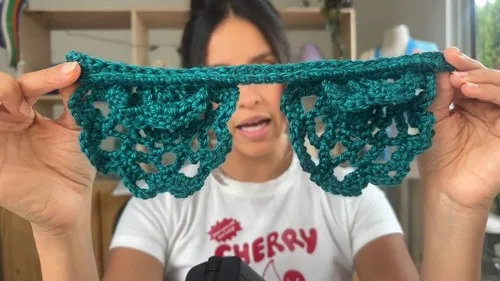
What makes this one satisfying is the way so few stitches build so much openness. You work all seven double-crochet-and-chain-one repeats straight into the same center ring, so the whole first round balloons out from one small knot into a wide, lacy circle before you've even turned your work. Then the second round takes those seven spaces and turns them into eight chain-three loops that curl the edge into soft scallops instead of a flat granny-square line. The header round is its own small trick: chaining in multiples of fourteen plus three and folding the motif as you connect it means you're not sewing squares together afterward, you're building the join right into the stitches as you go.
The rounds, in full

Written out, round by round

Beginner30 minutes to 2 hours4 mmWorsted

Bring to the porch

Everything this one takes, in the order you will reach for it.

  • 4mm hook
  • Heartland yarn by Lion Brand

Main Pattern

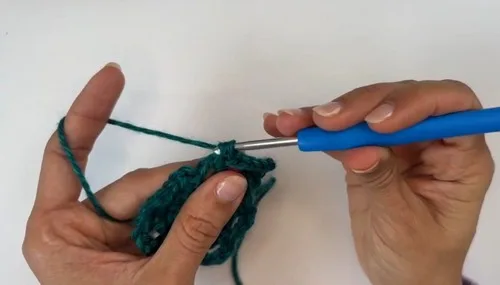
  1. Round 1Create a base ring, slip knot, and chain four Close the ring with a slip stitch to the fourth chain from the hookChain four (counts as a double crochet and a chain one)Work into the center of the ring seven times: yarn over, double crochet, chain one Slip stitch to the third chain of the turning chain
  2. Round 2Chain one, single crochet into the same chain Repeat eight times: chain three, skip the chain one space, single crochet on top of the next double crochetOmit the last single crochet, slip stitch into the first single crochet of the row For Row 3: Slip stitch into each of the next two chainsChain one, single crochet into the same chain Repeat eight times: chain six, single crochet into the next chain three spaceOmit the last single crochet, slip stitch into the first single crochet of the row
  3. Round 4Slip stitch to each of the next three chains Chain one, single crochet into that same chain spaceRepeat eight times: chain six, single crochet into the next chain six space Omit the last single crochet, slip stitch into the first single crochet
  4. Round 5Chain one, single crochet into the same stitch Repeat: two double crochets, chain four, two double crochets into the next chain spaceSingle crochet into the next single crochet Omit the last single crochet, slip stitch to the first single crochet of the row

Connecting the Motif to the Border

Header Preparation

Multiples of 14 + 3 chains for each motif

  1. Round 1of Header: Skip the first chain, single crochet into each remaining chain
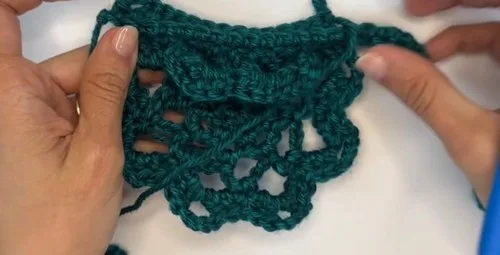
  2. Round 2of Header (Connecting Motif): Chain three (counts as a double crochet), flip workOne double crochet into the next stitch Connect the motif from right to left Follow specific stitch connections as shown in the video, using stitch markers for guidance

Create a fold in the motif as you connect it After connecting the motif, create five double crochets Ensure 14 stitches are left for the next motif

Repeat the process for additional motifs, maintaining the fold End with two double crochets

Marlene's notes

Note 01

The 4mm hook keeps the double-crochet rounds open and lacy; sizing down will tighten the scallops and shrink the finished motif.

Note 02

Keep a stitch marker on the first stitch of each round, especially through the eight chain-three loops, so the last slip stitch lands in the right spot.

Note 03

Watch your chain-four turning chains - if they're loose or tight compared to the rest of your stitches, the ring's opening will show it right away.

Porch photos

Before you sit down

  • Check how many motifs your project needs before you buy yarn - each one uses a small amount, but a full blanket adds up fast.
  • Set a stitch marker in the first double crochet of the ring round so you can count the seven repeats without losing your place.
  • Work one full motif as a swatch first, since the 4mm hook and your personal tension decide the final size more than the pattern does.
  • Read through the Header Preparation part once before you start joining, since the folding and connecting happens over just two rounds and goes quickly.

How the hours go

Main Pattern (4 rounds)
about 30-40 minutes because the four rounds build the ring, the seven-repeat opening round, and the scalloped edge in one sitting
Header Preparation (2 rounds)
about 15-25 minutes per join because folding and connecting the motif is fiddly the first few times you do it
Joining multiple motifs
about 1-2 hours for a small run of motifs, since each header round adds up alongside the base motif time

Looking after it

  • Acrylic yarn like this washes easily - a gentle machine cycle in cool water and a flat lay to dry will keep the scallops from stretching out of shape.
  • Reshape the chain-three loops with your fingers while the piece is still damp, then store it folded flat rather than hung, so the folded header edge doesn't crease permanently.
FAQs

Asked on the glider

the ones that come up on the glider

Can I make just one motif on its own?

Yes, the Main Pattern's four rounds stand alone as a small motif, so you can stop there for a coaster-sized piece or keep going into the header round to start joining. It only becomes part of a bigger project once you work the Header Preparation part.

How do the motifs actually connect to each other?

The Header Preparation round works in multiples of fourteen plus three chains, and the second header row folds the motif and connects it stitch by stitch as you go, using stitch markers to keep track. That means you join as you crochet the next motif rather than sewing pieces together afterward.

What if my ring feels loose after I close it?

A loose center usually means the slip stitch that closes the base ring wasn't pulled snug before you moved into the chain-four turning chain. Give that closing stitch a firm tug before working the first double crochet of round one.

Can I use a different hook or yarn weight?

You can, but changing the hook from the 4mm called for will change how open the lacy rounds sit and how big each motif turns out. Test one full motif first so you know the size before committing to a whole project's worth of yarn.

How many stitches should be left over for the next motif?

The Header Preparation part is built so fourteen stitches remain free for the next motif once you finish connecting, which keeps the multiples of fourteen plus three lining up across the whole row. Counting those fourteen stitches as you go is the easiest way to check you're on track.

Is this pattern good for a first-time motif project?

Yes, the pattern is designed to be beginner-friendly with clear steps, and the four rounds of the Main Pattern repeat familiar stitches like double crochet and chain spaces. The header and joining round takes a little more attention, so it's worth practicing on two motifs before committing to a full blanket run.